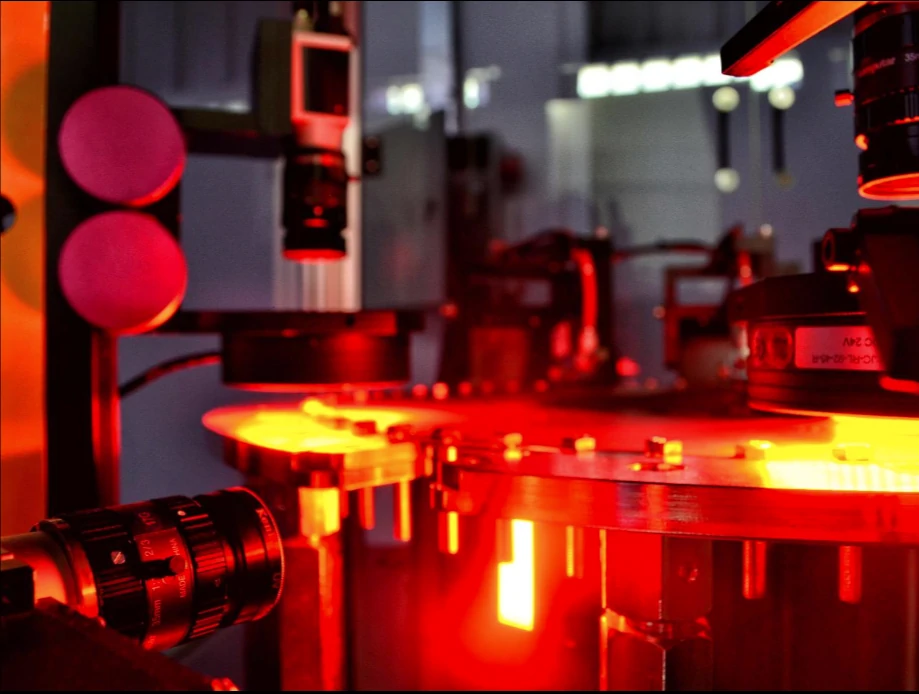
Fastener Inspection Machine: A Complete Guide to Fastener Quality Control
Fasteners such as screws, bolts, nuts, and studs are essential components used in automotive, electronics, construction, and machinery manufacturing. Although they are small parts, their quality directly affects the reliability and safety of the final product.
Even a tiny defect in a fastener can lead to serious mechanical failure. For this reason, manufacturers increasingly rely on fastener inspection machines to ensure consistent product quality and prevent defective parts from reaching customers.
This guide explains the most common fastener defects, the limitations of manual inspection, and how AI vision inspection technology is transforming fastener quality control.
Common Defects in Fasteners
Fasteners are typically produced in high volumes through processes such as cold heading, thread rolling, machining, and heat treatment. During these manufacturing steps, different types of defects can occur.
These defects generally fall into three main categories.
1. Surface Defects
Surface defects are among the most common problems in fastener manufacturing. They may occur during forming, heat treatment, or surface finishing processes.
Typical surface defects include:
- Scratches
- Surface cracks
- Burrs
- Dents or pits
- Rust or oxidation
- Plating defects
- Surface contamination
Some of these defects are extremely small and difficult to detect with the naked eye, especially when parts are moving quickly on a production line.
2. Structural Defects
Structural defects affect the integrity of the fastener and may cause failure during use.
Common structural defects include:
- Head cracks
- Deformed head
- Missing or damaged slots
- Broken or incomplete threads
- Bent shanks
- Improper thread formation
These defects are particularly critical for automotive and aerospace applications, where fastener failure can cause major safety issues.
3. Dimensional Defects
Dimensional accuracy is essential for proper assembly and load distribution.
Typical dimensional defects include:
- Incorrect length
- Diameter deviations
- Thread pitch errors
- Head diameter variation
- Concentricity problems
Even small dimensional deviations can prevent proper tightening or cause uneven stress distribution in assemblies.
Manual Fastener Inspection vs Machine Inspection
Traditionally, many fastener manufacturers relied on manual inspection to check product quality. However, this method has significant limitations, especially as production volumes increase.
Manual Inspection
Manual inspection usually involves operators visually examining fasteners under magnification or using simple measurement tools.
Advantages:
- Low initial investment
- Flexible for small production runs
However, manual inspection has several major drawbacks:
- Inconsistent results due to human fatigue
- Low inspection speed
- Difficulty detecting very small defects
- High labor cost
- Limited traceability
When production reaches hundreds or thousands of parts per minute, manual inspection becomes impractical.
Automated Fastener Inspection Machines
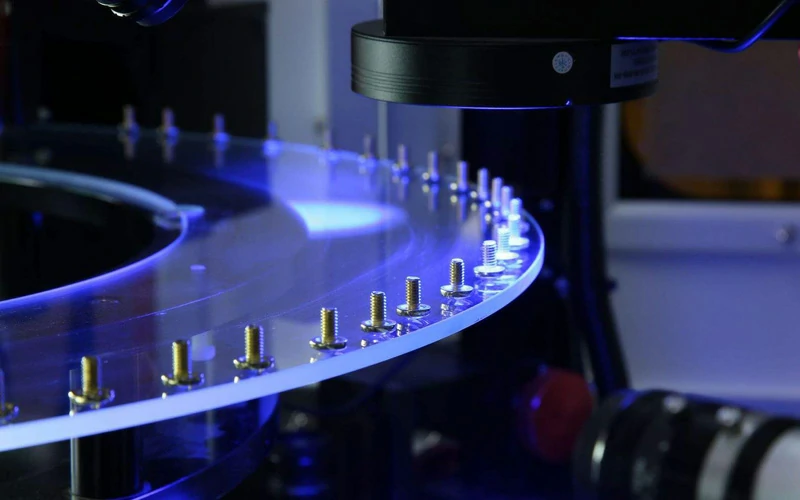
Modern manufacturers increasingly adopt automated fastener inspection machines that use optical vision systems and precision measurement technology.
Advantages include:
- 100% inspection of every part
- High-speed operation
- Consistent and objective inspection results
- Reduced labor cost
- Automatic defect sorting
Many systems can inspect hundreds to over a thousand parts per minute, making them ideal for high-volume fastener production lines.
How Fastener Inspection Machines Work
A typical fastener inspection machine combines several technologies to ensure accurate inspection.
The process usually includes the following steps:
- Automatic Feeding: Fasteners are fed into the machine through a vibration feeder or conveyor system.
- Part Orientation: Parts are properly aligned to ensure consistent imaging.
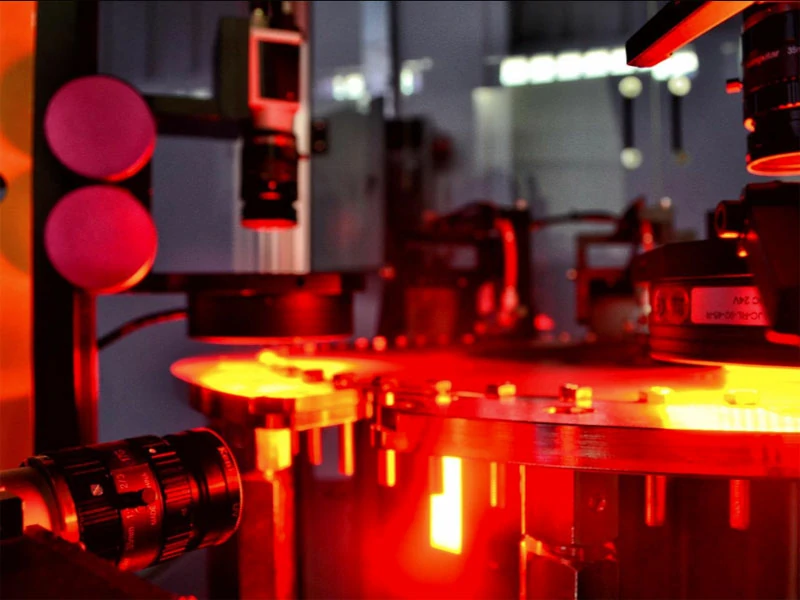
- Multi-Camera Imaging: Industrial cameras capture images from different angles, including top view and side view.
- Image Processing and Analysis: Vision software analyzes the captured images to detect defects and measure dimensions.
- Automatic Sorting: Good parts and defective parts are separated into different output channels.
This automated process allows manufacturers to inspect large quantities of fasteners efficiently and reliably.
The Rise of AI Inspection Technology
Traditional machine vision systems rely on rule-based algorithms that require engineers to define specific defect patterns. While effective for simple inspections, these systems can struggle with complex or unpredictable defects.
To address these limitations, many manufacturers are now adopting AI-powered inspection systems.
What Is AI Vision Inspection?
AI inspection systems use deep learning algorithms trained with large datasets of images containing both good parts and defective parts.
Instead of relying on fixed rules, AI models learn to recognize defect patterns automatically.
This enables the system to detect complex defects such as:
- irregular scratches
- micro cracks
- plating defects
- unpredictable surface anomalies
AI inspection systems continuously improve as more data is collected, making them more accurate over time.
Benefits of AI-Based Fastener Inspection
Compared with traditional inspection methods, AI vision systems offer several advantages.
- Higher Detection Accuracy: AI can identify subtle defects that traditional rule-based systems may miss.
- Better Adaptability: AI models can handle variations in lighting, surface finish, and part geometry more effectively.
- Reduced Setup Time: Instead of complex programming, engineers can train the system using sample images.
- Improved Production Efficiency: High-speed inspection combined with accurate defect detection ensures that only compliant fasteners reach customers.
Industries That Benefit from Fastener Inspection Machines
Fastener inspection systems are widely used in industries where quality and reliability are critical.
Common industries include:
- Automotive manufacturing
- Electronics production
- Aerospace components
- Industrial machinery
- Construction hardware
In these industries, automated inspection helps manufacturers maintain strict quality standards and avoid costly recalls or product failures.
The Future of Fastener Quality Control
As manufacturing continues to move toward smart factories and Industry 4.0, inspection systems are becoming more intelligent and integrated.
Future fastener inspection machines will increasingly feature:
- AI-driven defect detection
- real-time production data analysis
- integration with factory MES systems
- predictive maintenance capabilities
These technologies will help manufacturers improve quality control while reducing operational costs.
Conclusion
Fasteners may be small components, but their quality plays a crucial role in the safety and reliability of many industrial products.
Traditional manual inspection methods can no longer meet the demands of modern high-speed manufacturing. Automated fastener inspection machines, especially those powered by AI vision technology, provide a reliable solution for detecting defects, improving product quality, and increasing production efficiency.
As the manufacturing industry continues to evolve, advanced inspection technologies will become an essential part of maintaining competitive and high-quality production.