The Power of Transparency: Why Glass Plate Optical Sorting Machines Rule the Fastener Industry
The Ultimate Stage for Inspection
Over the last few weeks, we’ve covered the software that detects defects and the vibration bowls that feed the parts. But what happens when the parts actually reach the inspection zone? Where do they sit while their picture is taken?
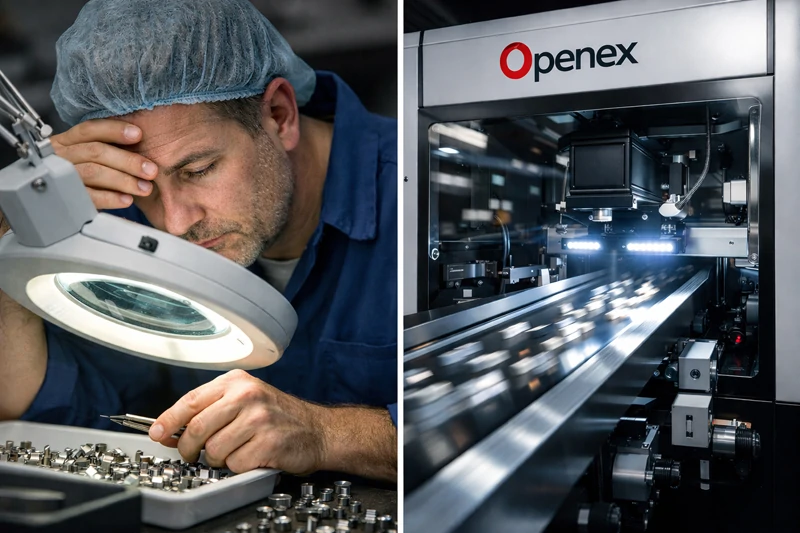
In the world of automated quality control, the surface a part rests on is just as critical as the camera inspecting it. If a bolt is moving down a traditional steel conveyor belt, there is a massive blind spot: You cannot see the bottom of the part.
To achieve true 100% 360-degree inspection without slowing down production to physically flip the part, engineers developed a brilliant solution: The Glass Plate Optical Sorting Machine. Also known as a “Glass Disc” or “Rotary Glass” machine, this is the undisputed heavyweight champion of the fastener, stamping, and flat-part industries.
Let’s look at how it works and why it is the go-to choice for high-volume manufacturers.
The Mechanism: A High-Speed Transparent Turntable
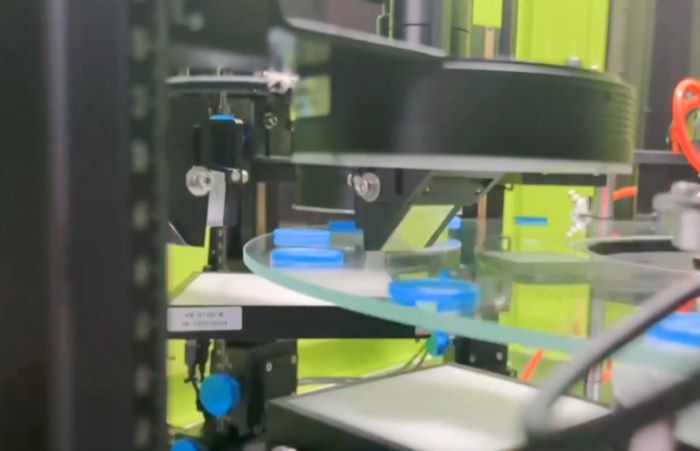
Imagine a heavy-duty DJ turntable, but the record is a thick, highly polished, ultra-transparent circular pane of optical glass. Here is how the continuous flow works:
- The Handoff: Parts exit the linear feeder (which we discussed last week) and gently slide onto the outer edge of the rotating glass disc.
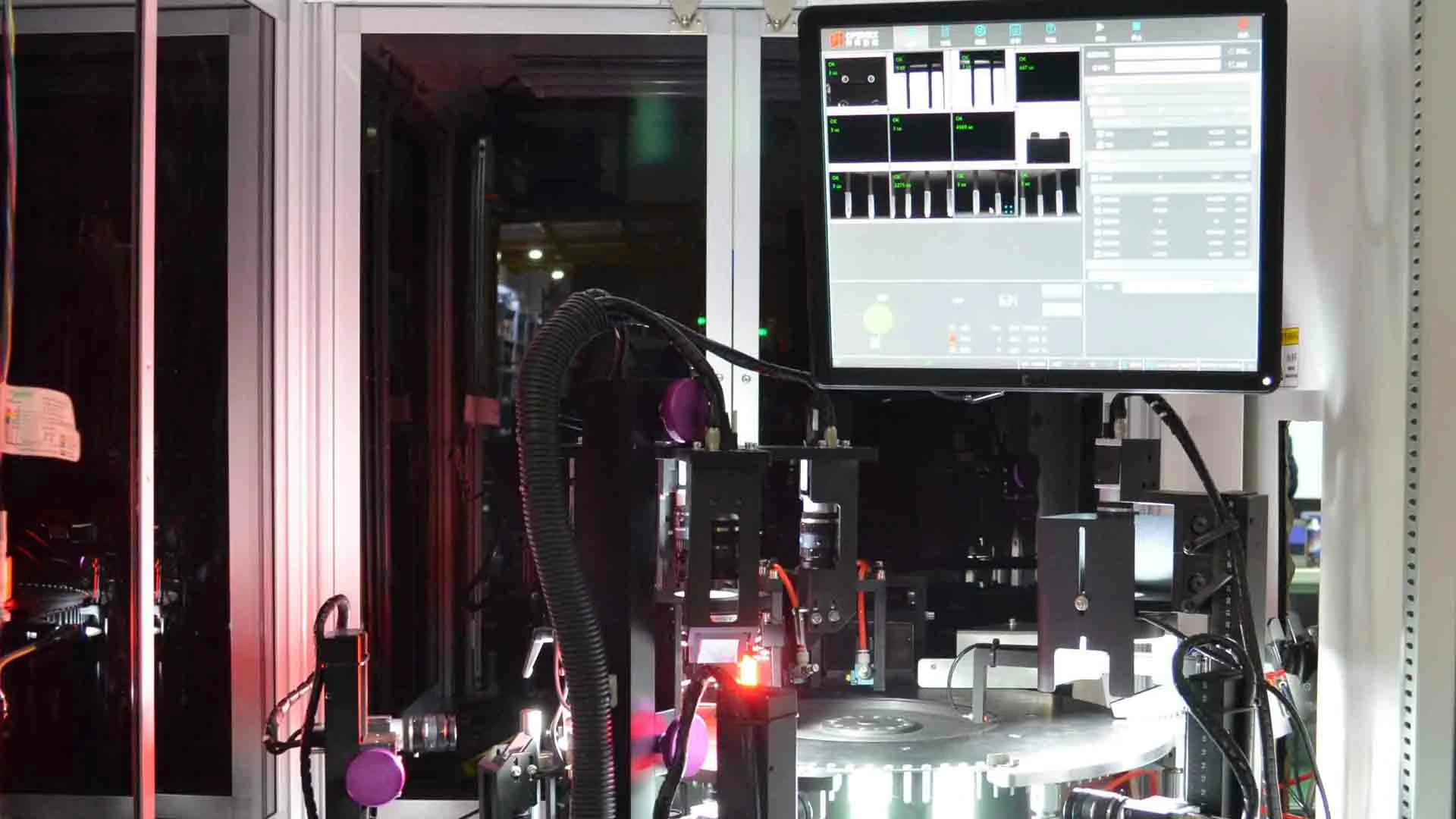
- The Journey: The disc spins continuously, carrying the parts smoothly through a series of “inspection stations” located around the perimeter of the machine.
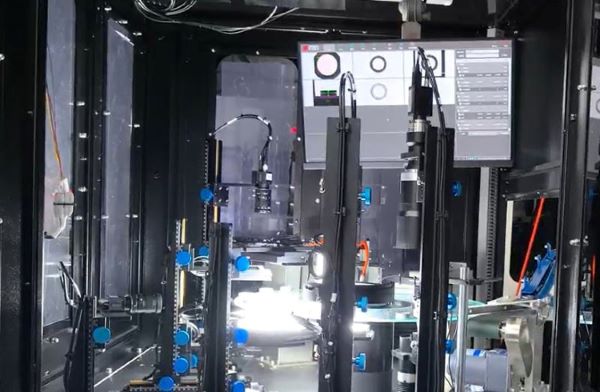
- The Vision: Because the parts are resting on a transparent surface, cameras and lighting can be mounted above, beside, and crucially, below the glass.
- The Sort: Once the part passes the final camera, an air-blow ejector shoots the part off the glass into the appropriate bin (Pass, Fail, or Rework) based on the software’s instant decision.
The “Underneath” Advantage: Why the Bottom View Matters
The ability to look straight up through the floor of the machine is the glass plate’s superpower. Why is this so important?
Consider a standard flanged hex bolt. When it feeds onto the glass, it hangs by its head, with the threaded shank pointing down. Or, consider a flat washer lying flat on the disc. With an underneath camera looking up through the glass, an Openex sorting machine can instantly measure and inspect:
- Under-Head Cracks: A critical structural failure point in automotive fasteners that top-view cameras cannot see.
- Thread Metrics: By looking up at the profile, the system calculates thread pitch, major/minor diameters, and thread damage.
- Bottom Surface Blemishes: Rust, missing plating, or welding spatter on the underside of a weld nut.
- True Hole Dimensions: For washers and stamped parts, bottom lighting combined with a top camera creates a perfect silhouette, allowing for micron-level measurements of Inner Diameters (ID) and Outer Diameters (OD).
Ideal Parts for a Glass Plate Machine
While incredibly versatile, glass plate machines are designed for specific geometries. They are perfect for parts that have at least one stable resting state (meaning they won’t roll around while the disc spins).
Perfect Candidates Include:
- Fasteners: Nuts, bolts, screws, rivets, and standoffs.
- Flat Parts: Washers, metal stampings, shims, and circlips.
- Rubber & Plastic: O-rings, gaskets, and flat injection-molded components.
- Electronics: SMD components and flat-bottomed connectors.
(Note: If you have cylindrical parts that roll easily, like dowel pins or roller bearings, Openex utilizes a different machine style, which we will cover next week!)
Addressing the Elephant in the Room: Won’t Metal Scratch the Glass?
This is the most common question we get from plant managers: “If I am running 1,000 steel bolts per minute over a glass table, won’t it scratch immediately and ruin the camera’s view?”
It is a valid concern, but modern engineering has solved it.
- Hardened Optical Glass: We don’t use window glass. Openex machines use specialized, tempered optical glass that is highly resistant to abrasion while maintaining perfect light transmission.
- Software Filtering: Even if microscopic micro-scratches occur over time, our AI and vision software are trained to “ignore” stationary background scratches and only focus on the moving part.
- Easy Replacement: The glass disc is considered a consumable wear part. When it eventually does wear down after millions of cycles, our machines are designed for rapid changeovers. A single technician can swap the glass plate out for a fresh one in a matter of minutes, minimizing downtime.
Conclusion: Clarity Drives Quality
If you are manufacturing high-volume hardware, you cannot afford blind spots. The Glass Plate Optical Sorting Machine provides the ultimate transparent stage, allowing Openex vision systems to scrutinize every angle, thread, and surface of your product. It is fast, reliable, and the industry standard for a reason.
Next Week: What if your parts aren’t flat? What if they roll, or need to be inspected while standing straight up? Join us next week for: Index vs. Continuous Motion: Choosing the Right Sorting Machine for Your Part.
Is a Glass Plate Machine Right for Your Product?
Not sure which machine configuration fits your parts? Reach out to the Openex team for a free application evaluation. Send us your drawings, and we will recommend the perfect automated solution.