Openex Automation at IMTS 2026: Bringing Real-World Inspection Challenges to the Manufacturing Floor
Openex Automation at IMTS 2026: Bringing Real-World Inspection Challenges to the Manufacturing Floor
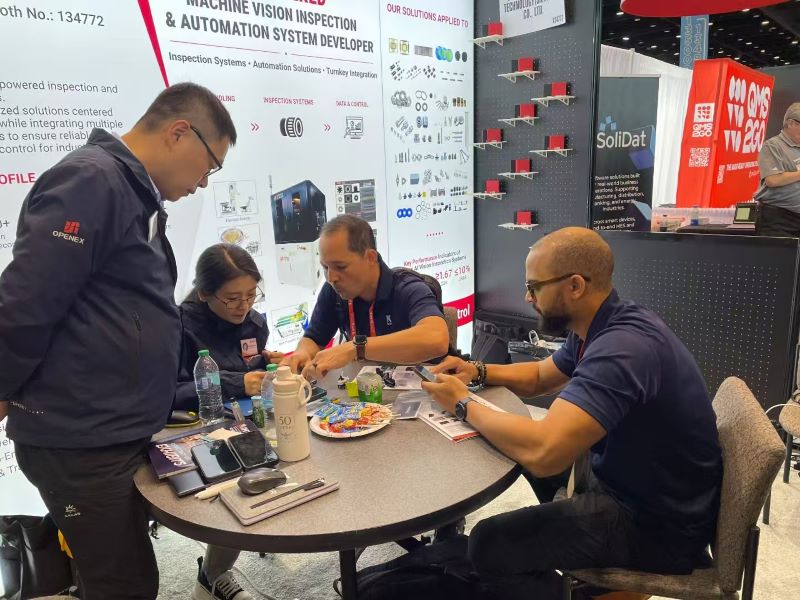
Two days into IMTS 2026, we are already seeing exactly why this show is such an important meeting point for manufacturing technology.
Precision parts, complex components, demanding quality requirements, and a wide range of inspection challenges are coming through our booth. For Openex Automation, these conversations are just as valuable as demonstrating a machine.
And personally, walking around IMTS feels a little like stepping into a giant manufacturing playroom. 😄
There are so many machines, technologies, automation systems, and manufacturing applications to explore—and every aisle brings another idea about how inspection and automation can solve a real production problem.
What We Are Hearing from Manufacturers at IMTS 2026
One of the most interesting parts of IMTS is that inspection requirements are rarely identical from one manufacturer to another.
A manufacturer may need to inspect:
- Precision dimensions and critical tolerances
- Surface defects such as scratches, dents, cracks, burrs, or contamination
- Threads, holes, slots, edges, and other geometric features
- Small metal or plastic components at high production rates
- Multiple surfaces or features in a single inspection cycle
- Appearance or assembly-related defects
- 100% inspection rather than sampling
- Automatic sorting of defective parts
- Inspection data and traceability for production quality control
These requirements are where machine vision inspection and industrial automation become particularly valuable.
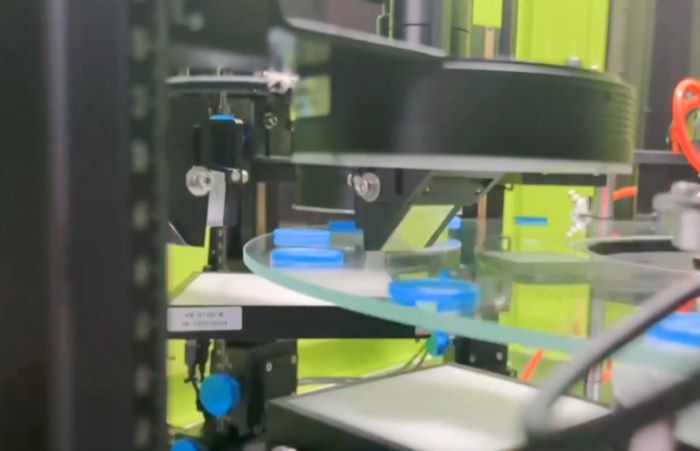
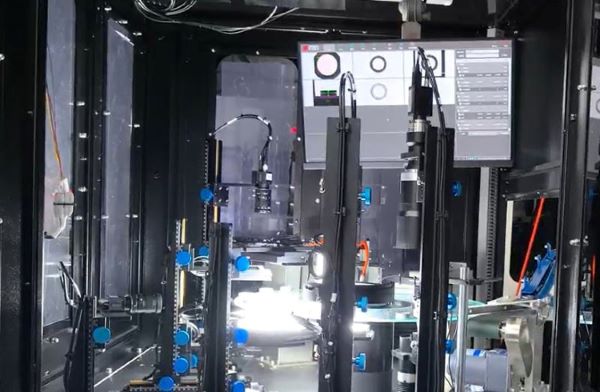
A vision inspection system is not simply a camera pointed at a part. A production-ready system needs the right combination of optics, lighting, cameras, mechanical handling, image processing, inspection algorithms, software, and automatic sorting.
For applications involving complex or variable defects, AI vision inspection can add another layer of capability by helping distinguish acceptable product variations from defects that are difficult to define using conventional rule-based vision alone.
Bring Us Your Parts and Inspection Challenges
This is one of the main reasons we enjoy exhibitions such as IMTS.
You do not need to have a complete inspection-system specification before talking with us.
If you have a part that currently requires manual inspection, a production line with inconsistent quality results, or a difficult defect that conventional inspection methods have not solved, bring the challenge to us.
We can start with the fundamentals:
What is the part? What needs to be inspected? What defects need to be detected? How fast is the production line? What level of inspection coverage is required? What happens to rejected parts?
From there, the inspection concept can be developed around the actual manufacturing requirement.
Depending on the application, a solution may combine industrial cameras, specialized lighting, dimensional measurement, multi-angle imaging, AI-based defect detection, automatic sorting, part feeding, and production-line integration.
From Precision Parts to Automated Quality Control
Openex Automation develops automated inspection and industrial automation solutions for manufacturers working with demanding quality requirements.
Our inspection technologies can be applied to a wide range of components, including:
- Fasteners such as screws, bolts, nuts, and other precision metal parts
- Automotive components
- Bearings
- Rubber and plastic parts
- Powder metallurgy components
- Electronic and semiconductor components
- Battery-related components
- Other custom precision-manufactured parts
For high-volume manufacturing, the objective is often more than simply finding defects.
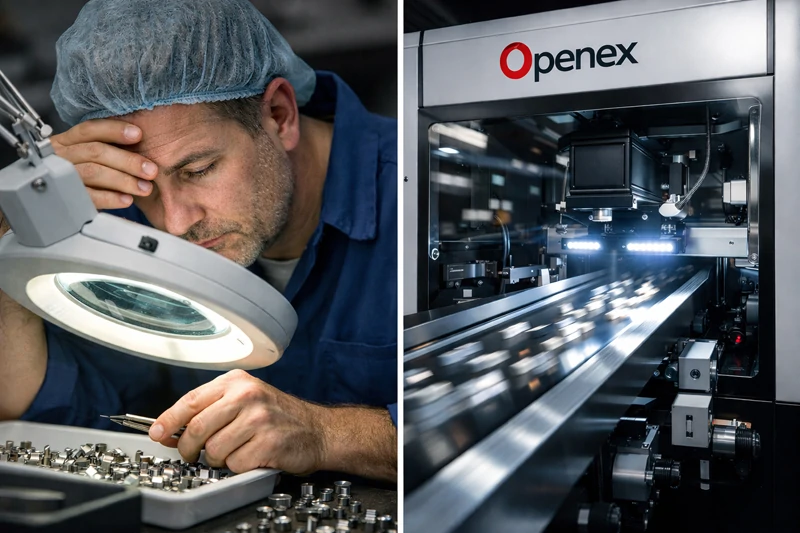
A well-designed inspection system can help manufacturers move from manual or sampling-based inspection toward consistent, automated, and traceable quality control.
That can mean inspecting every part, automatically separating nonconforming parts, recording inspection results, and integrating inspection into the wider production process.
The Best Inspection Solution Starts with the Part
Every inspection application has its own technical constraints.
A reflective metal surface may require a completely different lighting strategy from a black rubber component. A threaded fastener may require different imaging angles from a flat stamped component. A high-speed production line places different demands on feeding, image acquisition, processing, and sorting than a low-volume precision application.
That is why we recommend evaluating inspection systems using real parts and real defects whenever possible.
If you are considering automated inspection, bring your:
- Sample parts
- Engineering drawings
- Defect samples
- Critical dimensions
- Quality standards
- Production speed requirements
- Existing inspection data
- Photos or videos of the current production process
These details give our engineers a much better starting point for discussing the right inspection architecture.
More Than a Machine Vision Demonstration
IMTS is also an opportunity for us to learn.
The manufacturing industry is changing quickly, and inspection requirements are changing with it. Higher production volumes, tighter tolerances, more complex components, traceability requirements, and the growing adoption of AI are creating new challenges for quality teams.
Walking through IMTS gives us the opportunity to see what manufacturers, machine builders, automation companies, and technology developers are working on across the industry.
That is one of the things that makes the show so exciting.
There is always another machine to discover, another automation concept to understand, and another manufacturing problem that makes you think:
“There has to be a better way to inspect this.”
Sometimes, that is exactly where a new automation project begins.
Looking for an Automated Inspection Solution?
If you are at IMTS 2026 and have a precision part or inspection challenge, we would be happy to discuss it with you.
Bring us your parts, drawings, inspection requirements, defect samples—or simply a problem you have not yet found the right solution for.
Our team can help you evaluate whether machine vision, AI vision inspection, automated optical inspection, dimensional measurement, automatic sorting, or a customized inspection system is appropriate for your application.
If you are not attending IMTS, you can also send us your part drawings and inspection requirements directly. We can start the technical discussion before you make a purchasing decision.
Meet Openex Automation at IMTS 2026
📍 IMTS 2026 | East Building · Level 3 | Booth 134772
Bring your parts. Bring your toughest inspection problem.
Let’s see what we can come up with together.
Contact Openex Automation for an Inspection Solution
Frequently Asked Questions
What does Openex Automation provide?
Openex Automation provides automated vision inspection and industrial automation solutions, including machine vision inspection, AI vision inspection, automated optical inspection, automatic sorting, and customized inspection systems.
Can Openex inspect precision metal parts?
Yes. Openex Automation develops inspection solutions for precision-manufactured components, including fasteners, automotive parts, bearings, powder metallurgy components, electronic components, and other custom parts.
Can an AI vision system detect surface defects?
AI vision inspection can be used for certain surface and appearance defects, particularly when defect characteristics are difficult to describe using conventional rule-based image-processing methods. The appropriate technology depends on the actual part, defect type, surface characteristics, production speed, and required inspection criteria.
Can Openex Automation provide a customized inspection machine?
Yes. Inspection systems can be configured around the customer’s part geometry, inspection requirements, production rate, feeding method, camera configuration, lighting requirements, sorting process, and production-line integration needs.
What should I provide when requesting an inspection quotation?
The most useful information includes part drawings, sample parts, production volume or line speed, critical dimensions, defect types, quality requirements, and examples of acceptable and defective parts. Providing these details allows the inspection concept and quotation to be evaluated more accurately.
Can I discuss an inspection project with Openex Automation after IMTS?
Yes. Manufacturers who cannot meet the team at IMTS can send their drawings, sample-part information, inspection requirements, and defect examples directly to Openex Automation for technical discussion.
About Openex Automation
Openex Automation develops AI vision inspection systems, automated optical inspection solutions, and customized industrial automation systems for manufacturers seeking more consistent and automated quality control.
Our applications cover fasteners, automotive components, bearings, rubber and plastic parts, powder metallurgy components, electronics, semiconductors, battery-related components, and other precision-manufactured products.
Have a difficult part to inspect? Send us the drawing and inspection requirements.