
Spotlight on Automotive: Ensuring Zero-Defect for Safety-Critical Components
In the automotive industry, a single component failure is not an option. From steering and braking systems to electric vehicle battery packs, the reliability of safety-critical parts is paramount. A microscopic crack in a bearing, a misaligned connector, or a tiny flaw in a fastener can lead to catastrophic failures, massive recalls, and irreparable damage to a brand’s reputation.
For automotive manufacturers and their Tier 1 & 2 suppliers, achieving zero-defect manufacturing is the ultimate goal. This isn’t just a quality slogan; it’s a business imperative. In this week’s industry spotlight, we explore how Openex’s AI-powered visual inspection systems are engineered to meet this formidable challenge.
The Stakes: Why “Good Enough” is Not Enough
The automotive supply chain is defined by relentless pressure:
- Safety: Component failure can risk lives.
- Compliance: Strict adherence to IATF 16949 and other global standards is mandatory.
- Cost: The financial impact of a recall runs into hundreds of millions of dollars, not including legal fees and brand equity loss.
- Traceability: Every part must be traceable from raw material to final vehicle VIN.
-
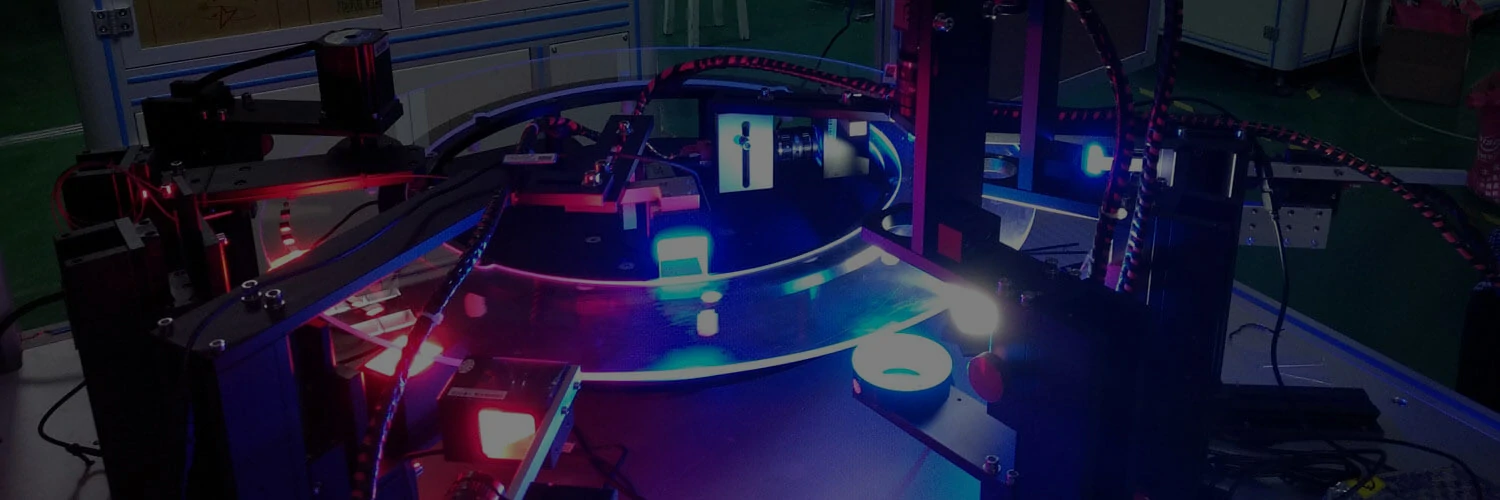
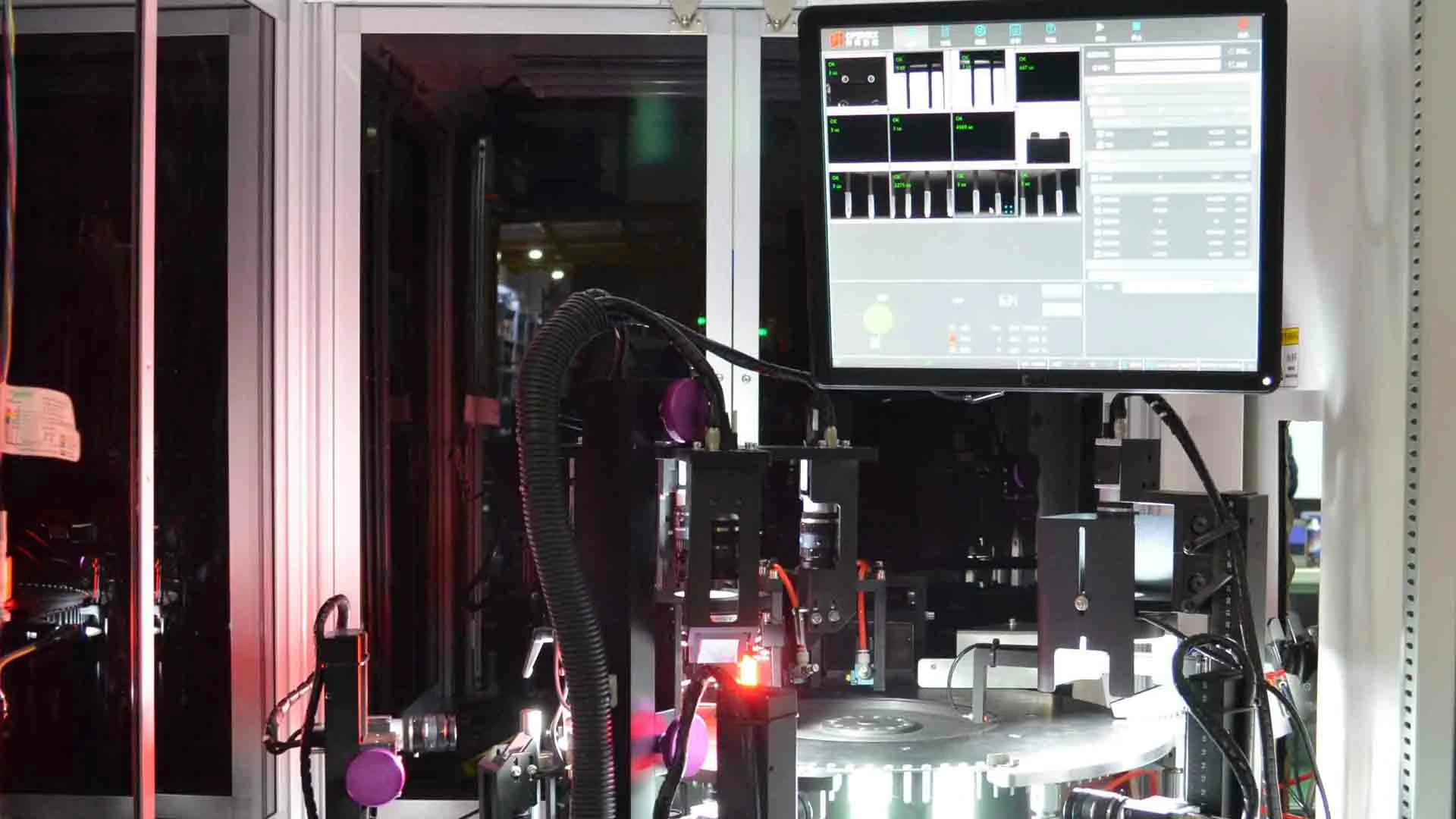
2. Lens & Camera: The Eye The lens focuses light onto a digital sensor inside the camera. High-resolution sensors capture incredibly detailed images, while high-speed cameras can snap thousands of crisp images per minute, even on fast-moving production lines. This is the system’s “retina.”
-
3. Processing Unit: The Brain This is a powerful industrial computer (IPC) or a dedicated vision controller. It doesn’t just receive the image; it processes it. This is where the software algorithms analyze the image to make a pass/fail decision in milliseconds. This is the system’s “brain.”
-
4. Communication & Actuation: The Nervous System Once a decision is made, the system must act. It sends a signal via I/O (Input/Output) cables or networking to downstream machinery—like a robotic arm to pick a defective part, a rejector arm to push it off the line, or a printer to mark it.

The Software Workflow: From Image to Action
The hardware captures the data, but the software is what finds the meaning. The inspection process follows these steps:
- 1. Image Acquisition: The camera, triggered by a sensor, captures a high-quality image under perfectly controlled lighting.
- 2. Pre-processing: The software enhances the image to make analysis easier. This can include adjusting contrast, reducing noise, or sharpening edges.
- 3. Analysis & Algorithm Execution: This is where the magic happens. The software uses powerful tools to inspect the part:
- **Traditional Rule-Based Algorithms:**Look for predefined patterns. For example, “find edges and measure the distance between them” to check dimensions, or “look for a blob of pixels that is darker than the surroundings” to find a stain.
- **AI & Deep Learning:**For complex, subjective, or unpredictable defects (e.g., subtle material discolorations, complex textured surfaces), AI models trained on thousands of images can make nuanced judgments much like a human expert would, but with unwavering consistency.
- 4. Decision & Communication: The software compares the analysis results to the acceptance criteria you’ve set. Is the measurement within tolerance? Is a defect present? Based on this, it sends a signal: OK or NG (Not Good).
- 5. Actuation: The rejector mechanism (e.g., an air jet, a pusher arm) physically removes the defective part from the production line based on the signal.
Why Machine Vision Beats Human Vision Every Time
- Speed: Inspects thousands of parts per hour, far beyond human capability.
- Accuracy & Consistency: Never gets tired, bored, or distracted. It applies the same exact standard to every single part, 24/7.
- Precision: Measures features to microscopic tolerances impossible for the human eye to see.
- Data Richness: It doesn’t just reject a part; it records the defect type, location, and time stamp for every single event, creating a powerful dataset for quality traceability and process improvement.
Ready to Speak the Language of Machine Vision?
The world of AOI has its own terminology. Understanding terms like “pixel,” “ROI,” “false positive,” and “telecentric lens” is key to specifying and understanding your inspection system.
We’ve created a Visual Inspection Glossary to demystify the technical jargon. It is an essential resource for engineers, quality managers, and anyone looking to evaluate or implement automated inspection.
In this free glossary, you’ll find clear definitions of:
- Key hardware components (sensors, optics, IPC)
- Essential software terms (algorithms, deep learning, OCR)
- Critical performance metrics (accuracy, repeatability, FPS)
- And much more.
[Visit the Visual Inspection Glossary Here]
Empower your team with knowledge. Download the glossary today and start speaking the language of quality automation.