What is an Optical Sorting Machine? The Ultimate Guide to Automated Quality Control
Introduction
In the world of high-volume manufacturing, “Zero-Defect” is no longer just a goal—it is a requirement. Whether you are producing millions of automotive fasteners, precision electronic components, or medical devices, a single defective part can lead to costly recalls, production stoppages, and damaged reputation.
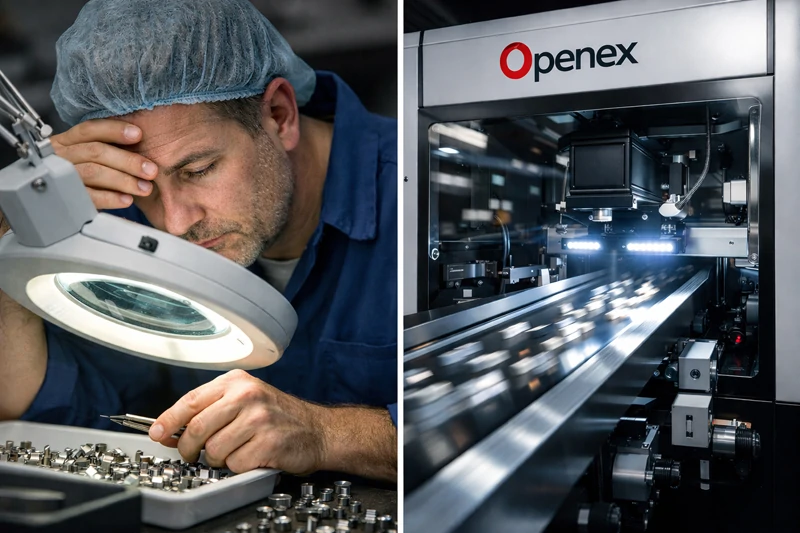
For decades, manufacturers relied on manual inspection to catch these errors. But the human eye fatigues, and manual sorting is slow, inconsistent, and expensive.
Enter the Optical Sorting Machine.
As the cornerstone of modern Industry 4.0 quality control, optical sorting machines are transforming how factories handle quality assurance. But what exactly is this technology, and how does it manage to inspect, measure, and sort thousands of parts per minute?
In this guide, we break down the mechanics, capabilities, and business value of automated optical sorting.
What is an Optical Sorting Machine?
An Optical Sorting Machine (often called an Automated Optical Inspection or AOI system) is a high-speed automation system that uses computer vision to inspect products for defects and dimensional accuracy.
Unlike a standard quality check where a worker might spot-check 1 out of every 100 parts, an optical sorting machine inspects 100% of the parts produced. It acts as a gatekeeper, automatically separating “Good” (OK) parts from “Bad” (NG/No Good) parts based on strict, pre-programmed criteria.
The core promise is simple: Every single part that enters the shipping box has been verified by a machine that never blinks and never gets tired.
How Does It Work? The 4-Step Process
To understand the power of an Openex optical sorting machine, you need to look under the hood. The process happens in milliseconds, but it involves four distinct stages:
1. The Feeding System (Orientation)
Before a part can be inspected, it must be presented to the cameras correctly. Parts are dumped in bulk into a Vibration Bowl or Centrifugal Feeder. This mechanism shakes and aligns the parts (e.g., bolts, nuts, or O-rings) into a single file line, feeding them onto the inspection track at speeds often exceeding 500 to 1,200 pieces per minute.
2. The Inspection Stage (Glass Plate vs. Index Table)
Once aligned, the parts move to the “stage.”
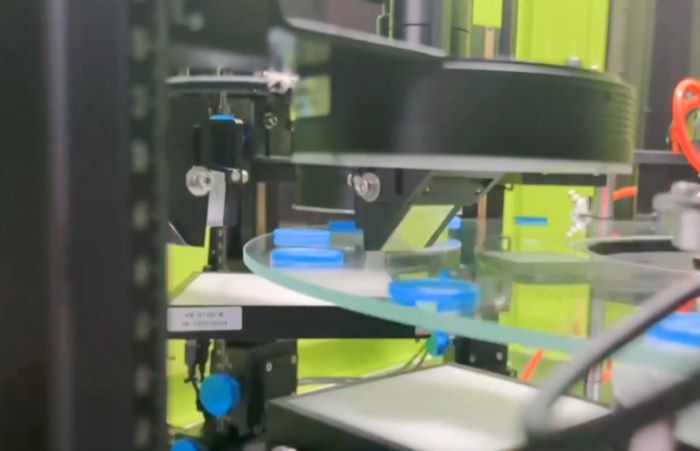
- Glass Plate Systems: The most common for fasteners. Parts slide onto a highly transparent, hardened glass table. Because the glass is clear, cameras can inspect the part from underneath, as well as from the top and sides.
- Index Table Systems: Used for heavier or unstable parts. Parts are grabbed by a mechanical dial or gripper to hold them steady during inspection.
3. The Vision System (Lighting & Cameras)
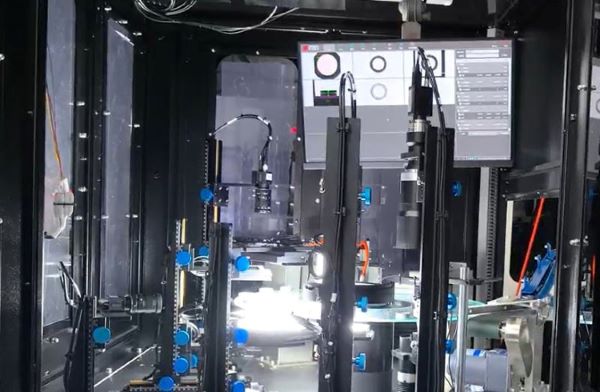
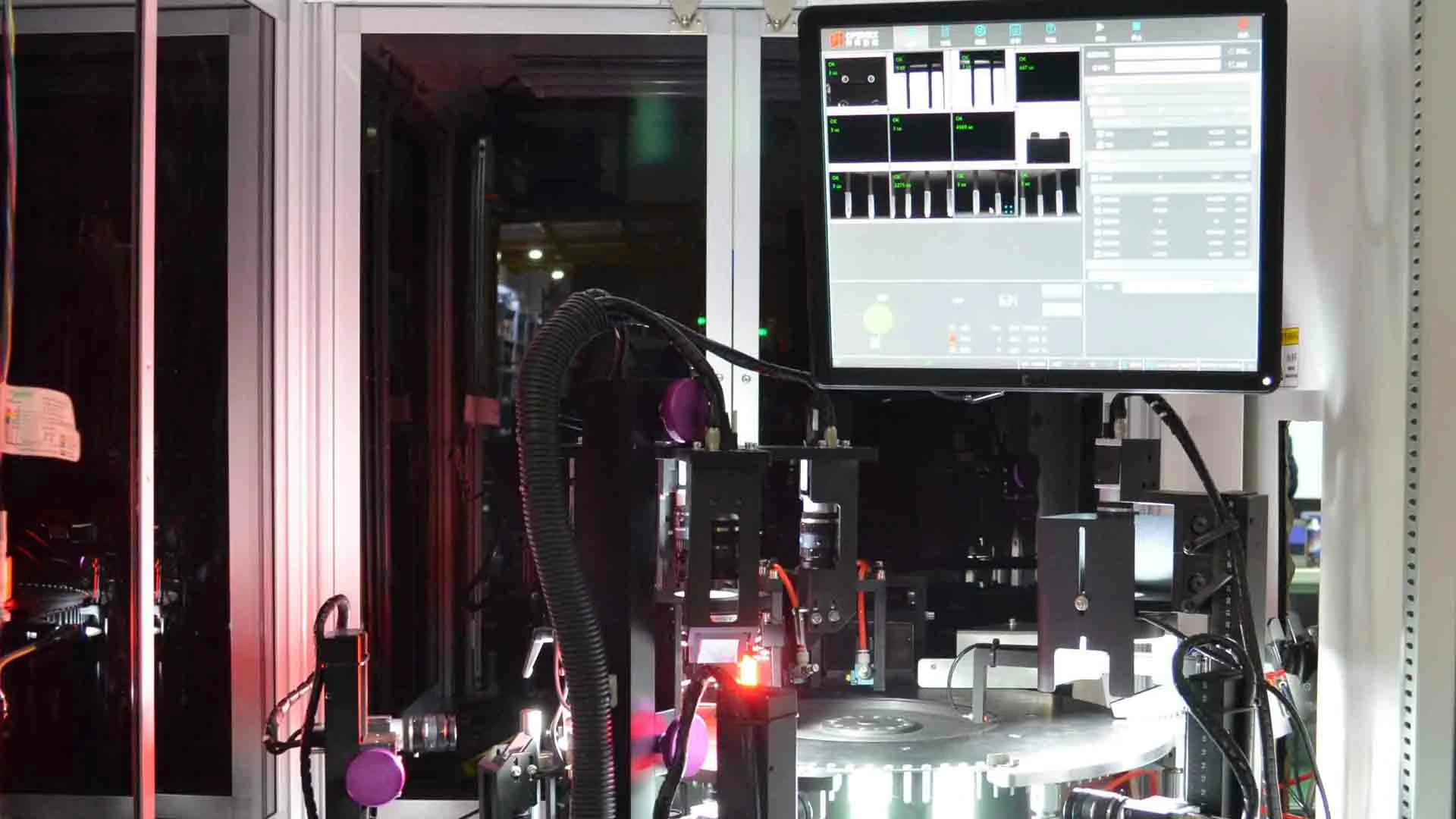
This is the “eye” of the machine. High-resolution industrial cameras capture images of the part from 360 degrees.
- Top Camera: Checks the head, drive recess, or top surface.
- Bottom Camera: Looks through the glass to check the bottom surface.
- Side Cameras: Multiple angled cameras inspect threads, height, and side profiles.
- Lighting: Specialized LED lighting (dome, coaxial, or low-angle) is used to eliminate shadows or highlight specific features like surface scratches.
4. The Sorting Mechanism (Pass/Fail)
The machine’s software analyzes the images instantly. If a defect is found, the system tracks that specific part. As it reaches the end of the line, a pneumatic air blast or mechanical gate diverts the defective part into a “Reject” bin, while good parts continue to the “Pass” bin for packaging.
Double Duty: Surface Defects vs. Dimensional Measurement
One of the biggest misconceptions about optical sorting machines is that they only look for “ugly” parts. In reality, Openex machines perform two critical functions simultaneously:
1. Dimensional Measurement (Metrology)
The machine acts as an automated caliper. It measures critical dimensions with micron-level precision, including:
- Total Length & Head Height
- Outer & Inner Diameters
- Thread Pitch & Angle
- Concentricity & Roundness
2. Surface Defect Detection (Cosmetic)
While measuring, the machine is also scanning for physical imperfections that don’t affect size but affect quality:
- Cracks & Burrs: Tiny fractures in metal or excess material left from machining.
- Plating Issues: Rust, missing coating, or discoloration.
- Scratches & Dents: Damage caused during the production process.
- Foreign Material: Oil stains or metal shavings stuck to the part.
Why Manufacturers Are Switching to Optical Sorting
Why replace manual labor with automation? The ROI is usually realized within 6 to 12 months due to three factors:
- Speed: A human might inspect 5 parts per minute. An Openex machine can inspect 1,000.
- Accuracy: Humans maintain about 80% reliability over an 8-hour shift due to fatigue. Optical machines maintain 99.9% reliability 24/7.
- Data & Traceability: Modern manufacturers need data. Our machines record the statistics of every batch, telling you exactly why parts are failing (e.g., “Tool #4 is causing scratches”), allowing you to fix the root cause in production.
Is Your Production Ready for Automation?
If you are manufacturing fasteners, automotive components, electronic hardware, or medical consumables, manual inspection is likely your biggest bottleneck.
An Optical Sorting Machine doesn’t just sort parts; it sorts your reputation, ensuring that what you deliver to your customer is flawless, every time.
Next Week: We will dive deep into the specific defects these machines can catch—from “invisible” scratches to thread damage—in our post: Zero-Defect Manufacturing: How Optical Sorting Machines Detect Surface Imperfections.
Explore Openex Optical Sorting Machines
Need a customized solution? Contact our engineering team today for a free consultation on your parts.