The High Cost of Human Error: Manual Inspection vs. Optical Sorting Machines
Introduction: The “Friday Afternoon” Problem
Every Plant Manager knows the scenario: A batch of parts produced on Tuesday morning passes quality control with flying colors. The same batch produced on Friday afternoon? It gets rejected by the client three weeks later.
Why? The machinery didn’t change. The raw material didn’t change. The inspector changed.
Or perhaps, the inspector didn’t change, but their energy level did.
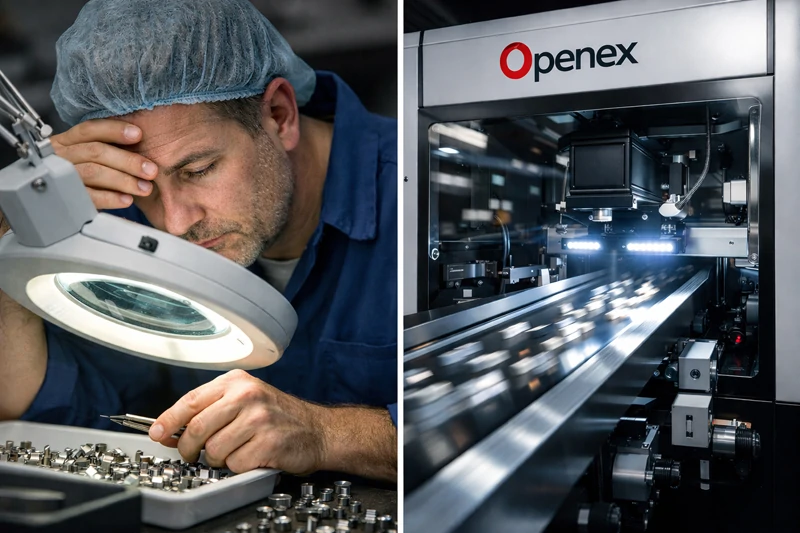
In the pursuit of “Zero-Defect” manufacturing, the human element is often the most unpredictable variable. While human eyes are incredible instruments, they are biologically ill-equipped for the repetitive, high-speed focus required in modern manufacturing.
In this comparison, we break down the three critical metrics of production—Speed, Accuracy, and Cost—to analyze the real difference between Manual Inspection and Automated Optical Sorting Machines.
1. Speed: The Throughput Bottleneck
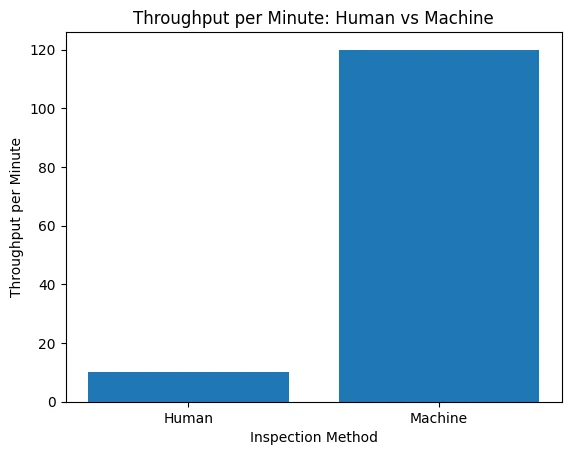
The most obvious difference between human and machine is sheer volume.
Manual Inspection: An experienced quality control worker can visually inspect and sort a complex part (like a threaded bolt or an electronic connector) at a rate of roughly 10 to 15 pieces per minute. To keep up with a production line churning out thousands of parts an hour, you need an army of inspectors. This creates a bottleneck; production speed is limited by how fast your QC team can work.
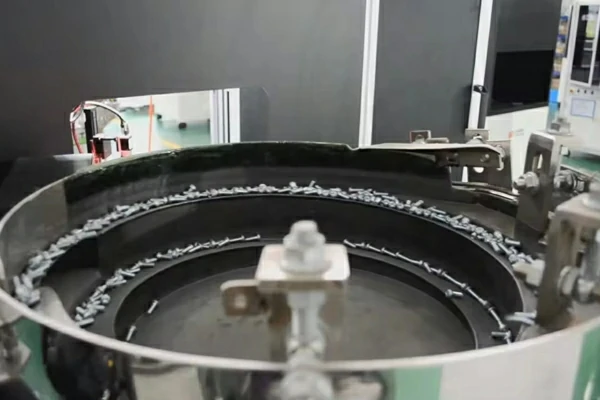
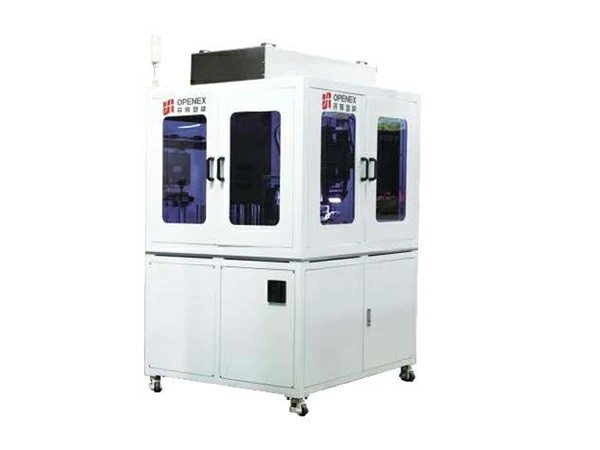
Optical Sorting: An Openex Optical Sorting Machine operates at a different magnitude. By utilizing vibration bowls and high-speed conveyors, these machines can inspect, measure, and sort parts at speeds ranging from 300 to 1,200 pieces per minute, depending on the part size.
The Math: 1 Machine = The output of roughly 40 to 60 human inspectors.
Result: The bottleneck is eliminated. Quality control keeps pace with production.
2. Accuracy: Biology vs. Algorithms
This is where the hidden costs of manual inspection lie.
The Human Limit (Fatigue & Hypnosis): Studies in industrial psychology show that human accuracy in repetitive tasks drops significantly after just 20 minutes. This is known as “inspection fatigue.” Furthermore, “highway hypnosis” sets in—when you see 5,000 good parts in a row, your brain naturally stops expecting a bad one, causing you to miss the 5,001st part which is defective.
- Average Human Accuracy: 80% - 90% (declines over the shift).
- Subjectivity: Worker A might think a scratch is “acceptable,” while Worker B thinks it’s a “fail.”
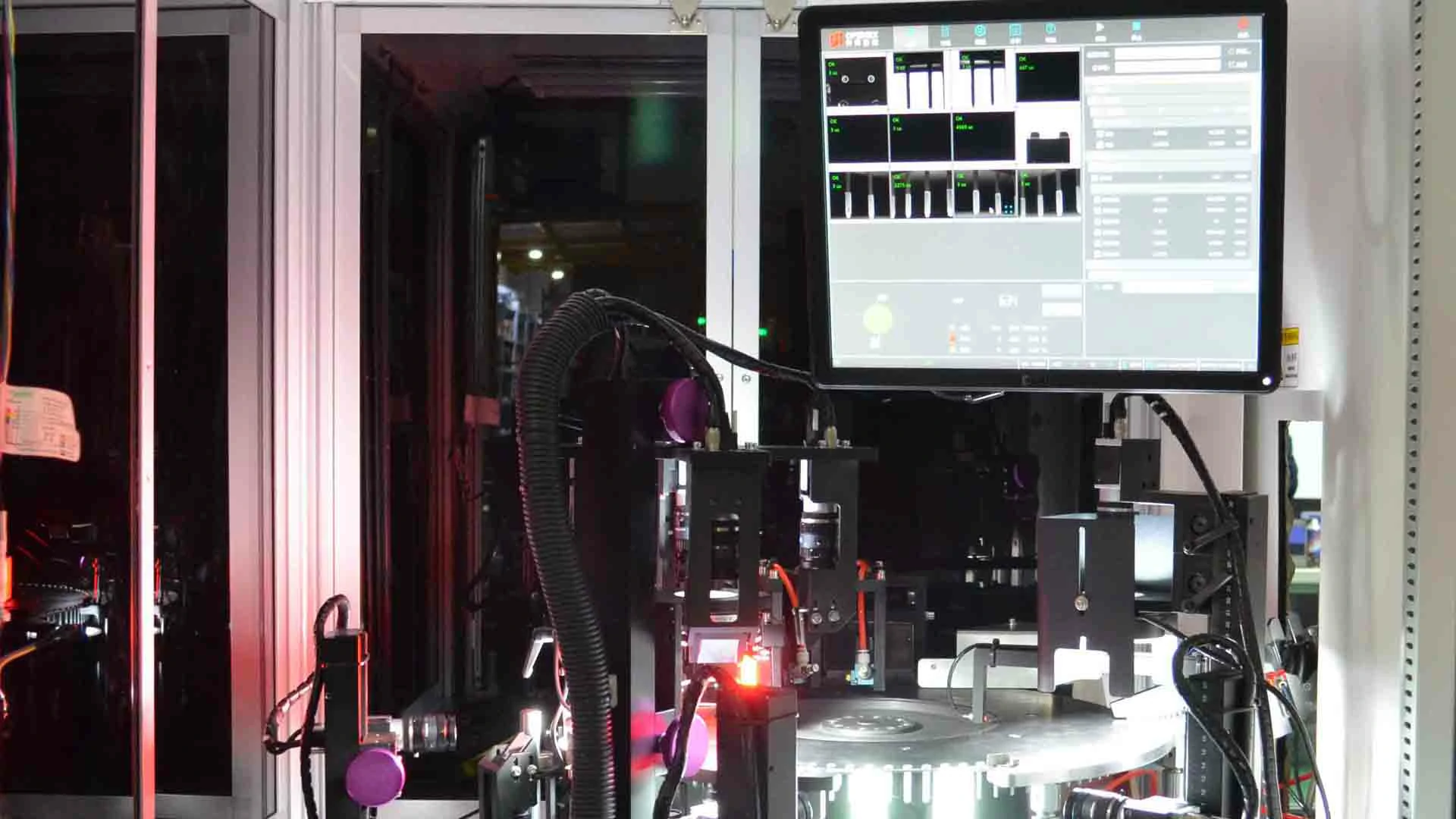
The Machine Advantage (Consistency): An Automated Optical Inspection Machine relies on defined algorithms and precise pixel measurements. It does not get tired, it does not get bored, and it does not have “bad days.”
- Objective Criteria: If you program the machine to reject any scratch longer than 0.5mm, it will reject every single one, whether it’s 8:00 AM or midnight.
- Resolution: Human eyes struggle to see defects smaller than 50 microns without aid. Openex cameras can detect micro-cracks and variances as small as 10 microns effortlessly.
3. Cost: Operational Expense (OpEx) vs. Capital Expense (CapEx)
Business owners often hesitate at the upfront cost of an automation machine. However, when looking at the Total Cost of Ownership (TCO), the picture flips.
Manual Inspection Costs (Recurring): Manual inspection is an Operational Expense. You pay for it forever.
- Wages & Benefits (rising annually).
- Recruitment & Training costs (high turnover rates in QC jobs).
- Sick leave and shift scheduling management.
- The Hidden Cost: The cost of escapes. If a human misses a defect and you ship it to an automotive client, the resulting penalty fees, sorting charges at the client’s site, and reputation damage can cost more than the machine itself.
Optical Sorting Costs (Investment): An Optical Sorting Machine is a Capital Expense. You pay for it once.
- Initial purchase & setup.
- Minimal electricity and routine maintenance.
- ROI: Most manufacturers find that an Openex machine pays for itself in 6 to 12 months purely in labor savings, not counting the savings from reduced client returns.
Summary Comparison Table
| Feature | Manual Inspection | Optical Sorting Machine |
|---|---|---|
| Throughput | 10–20 parts/min | 300–1,200 parts/min |
| Availability | 8-12 hours/day (requires breaks) | 24/7 continuous operation |
| Defect Detection | Subjective (varies by person) | Objective (based on data) |
| Data Recording | Paper checklists (slow/error-prone) | Digital “Passport” for every part |
| Micro-Defects | Misses defects < 0.1mm | Detects defects < 0.01mm |
| Long-term Cost | High (Wages increase) | Low (Machine is paid off) |
Conclusion: Liberating Your Workforce
Switching to Industrial Automation isn’t about eliminating jobs—it’s about optimizing talent.
Asking a human being to stare at a stream of nuts and bolts for 8 hours a day is a misuse of human potential. It leads to burnout and errors. By automating the repetitive “sorting” task, you can retrain your workforce for higher-value roles, such as machine operation, process engineering, or final audit checks.
The verdict is clear: If you want to scale production while guaranteeing zero defects, the human eye is no longer enough. You need the precision of computer vision.
Next Week: We will explain how Openex machines manage to do two jobs at once—checking for surface defects and measuring dimensions simultaneously—in our post: Surface Defects vs. Dimensional Measurement: The Dual Power of Openex Machines.
Calculate Your ROI
Unsure if automation is worth the investment? Contact the Openex team, and we will help you calculate how much time and money an Optical Sorting Machine can save your specific production line.