
Irregular-Shaped Parts Inspection Machine
Overview
Irregular-shaped clips are widely used in automotive interiors and furniture assembly. They leverage aluminum’s elasticity to enable quick and firm joining between multiple extruded profiles — offering easier installation, removal, and long-term stability compared to screw-based connections.
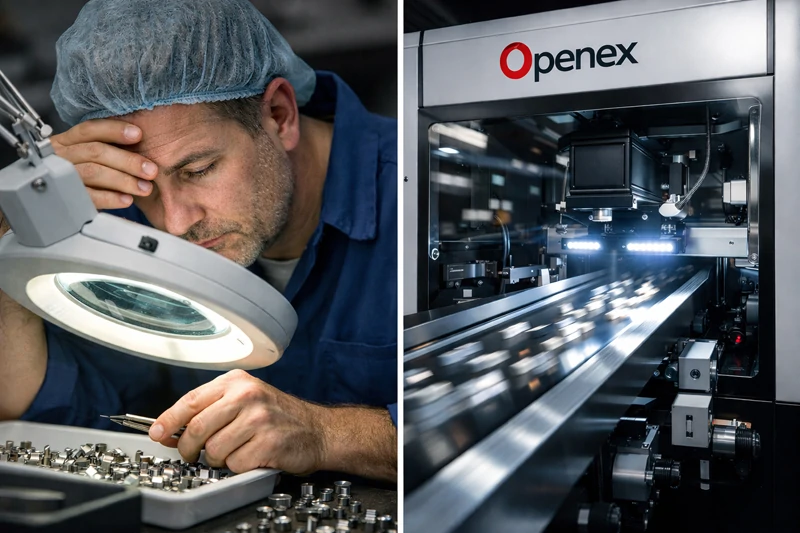
Because clip structures are more complex and precise than ordinary fasteners, quality consistency is crucial. Even small dimensional deviations can cause assembly issues, noise, or detachment during use. Therefore, automatic visual inspection has become an essential step in modern clip manufacturing.
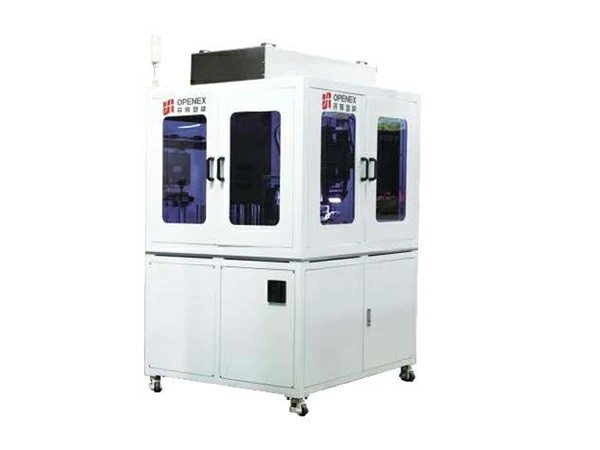
Openex has developed a dedicated inspection solution for irregular-shaped clips that ensures consistent, traceable, and high-speed inspection on production lines — powered by AI vision and precision mechanical engineering.
Specifications
- Inspection Object: Irregular-shaped aluminum clips
- Inspection Items: Opening width, dual-wing curvature, total height
- Inspection Speed: 150-250 pieces/min
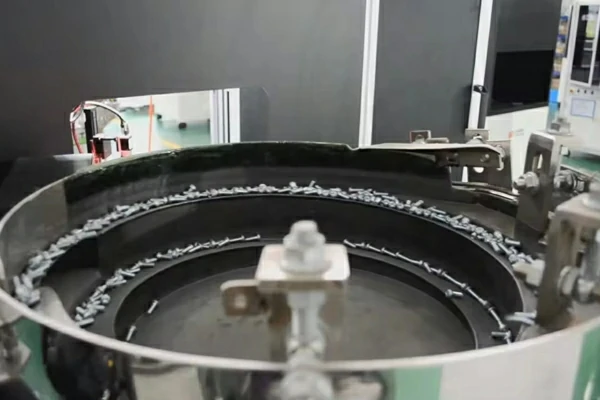
- Feeding System: Automatic belt-to-glass-disk transition with anti-drop design
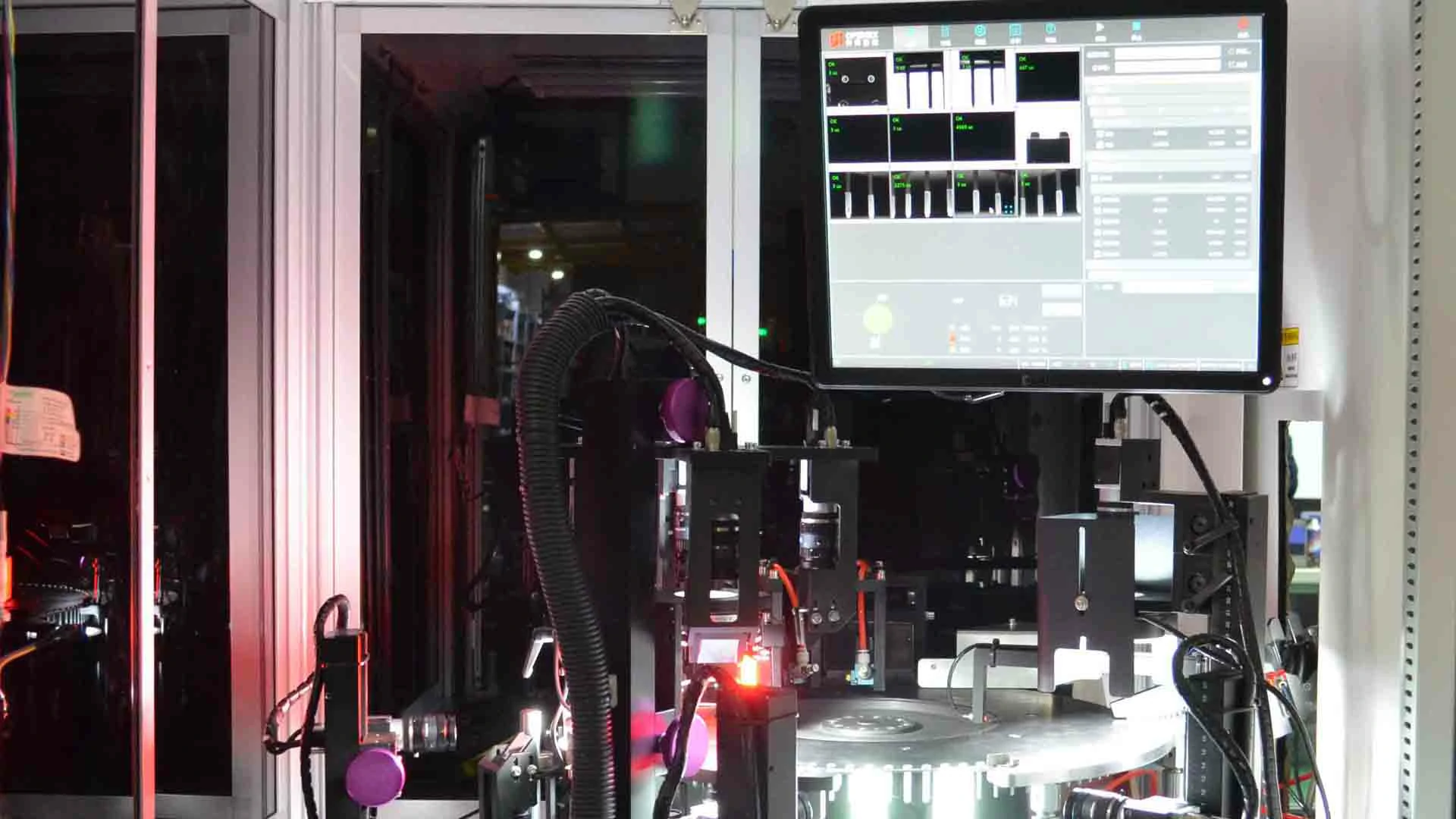
- Imaging Method: Multi-angle high-speed industrial cameras.
- Lighting: Coaxial illumination for precise edge separation.
- Accuracy: ±0.01 mm for dimensional measurements.
Technical Highlights & Features
- Stable Feeding for Lightweight Parts
The biggest challenge in inspecting light aluminum clips is maintaining stable feeding during belt-to-disk transfer.
Openex engineers redesigned the transition mechanism, eliminating part drop due to centrifugal force and ensuring every workpiece reaches the first inspection station in the correct orientation. - Precision Opening Width Measurement
Openex’s optical engineers applied coaxial lighting technology to clearly separate the base and opening surfaces, enabling high-contrast edge recognition and micron-level precision measurement. - AI Vision for Shape & Surface Analysis
Using deep learning algorithms, the system automatically identifies shape deviations, surface defects, or deformation — without manual parameter tuning. This reduces setup time and ensures long-term reliability across production batches. - Modular and Scalable Design
The system can be customized to include additional measurement points, multiple cameras, or integrate with robotic handling and packaging systems for full automation.